


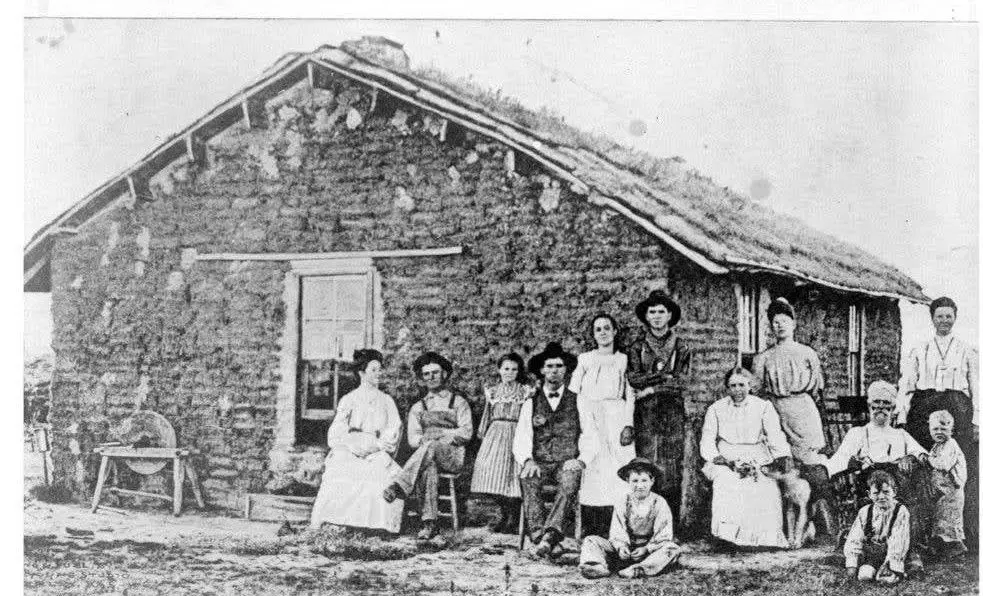
Family in front of a sod house

Family in front of a sod house
United States
United States › Kansas › Rawlins County › Atwood
1915
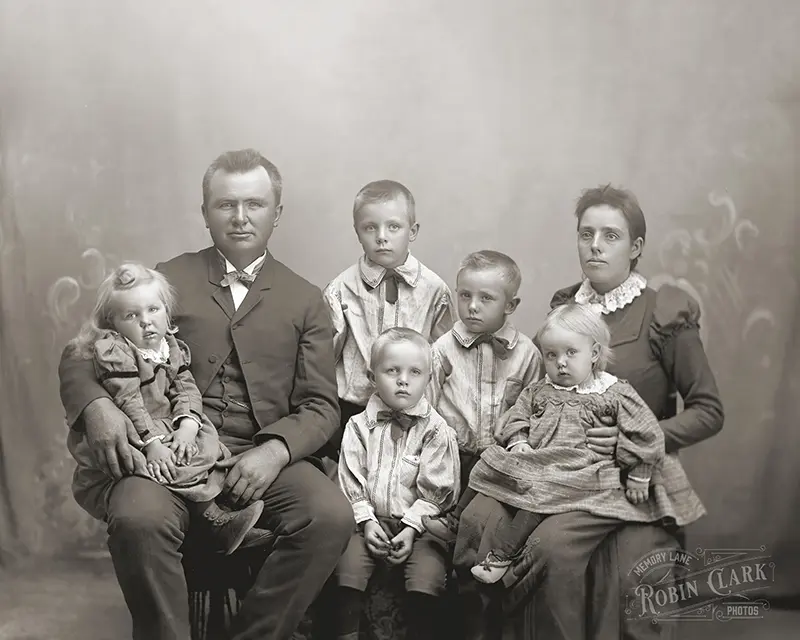
This photograph shows a family gathered on a Sunday afternoon in front of their sod house near Atwood, around 1915.
Sod houses were homes built from blocks of prairie soil and grass roots cut directly from the ground. In the treeless landscapes of the Great Plains, where timber was scarce and expensive, settlers used thick layers of prairie sod as building material. The blocks were stacked like bricks, creating solid walls that provided good insulation against both the harsh winters and the intense summer heat.
These homes became especially common during the settlement of the American West in the late 19th and early 20th centuries, encouraged by policies such as the Homestead Act, which granted land to settlers willing to farm and live on it.
In the image, the family poses proudly in front of their home. The adults wear long dresses, work clothes, and hats typical of rural life at the time, while several children sit or stand near the entrance. The simple setting reflects the everyday life of farming families on the frontier—large households, hard work, and strong community ties.
Although many sod houses were later replaced with wooden or brick buildings, they remain one of the most recognizable symbols of pioneer life across the Great Plains.
A humble but powerful glimpse into rural frontier life in early 20th-century America. 📷
----------------------------------------------------
Familia frente a una casa de césped (sod house)
Estados Unidos
Estados Unidos › Kansas › Rawlins County › Atwood
1915
Esta fotografía muestra a una familia reunida un domingo por la tarde frente a su casa de césped o sod house cerca de Atwood, alrededor de 1915.
Las sod houses eran viviendas construidas con bloques de tierra y raíces de pradera cortados directamente del suelo. En las Grandes Llanuras, donde escaseaban los árboles y la madera, muchos colonos recurrieron a este método para levantar sus hogares. Los bloques de césped se apilaban como ladrillos, formando paredes gruesas que aislaban bien tanto del frío invernal como del calor del verano.
Este tipo de vivienda fue especialmente común durante la colonización agrícola del oeste estadounidense en el siglo XIX y principios del XX, impulsada por leyes como la Homestead Act, que otorgaba tierras a quienes estuvieran dispuestos a cultivarlas y habitarlas.
En la imagen, la familia posa frente a la fachada de su hogar, probablemente después de la jornada dominical o tras asistir a la iglesia. Las mujeres visten largos vestidos, mientras los hombres y niños aparecen con sombreros y ropa de trabajo. La escena refleja la vida cotidiana de los pioneros en las praderas del Medio Oeste: familias numerosas, agricultura de subsistencia y comunidades rurales aisladas.
Aunque muchas de estas viviendas fueron reemplazadas posteriormente por casas de madera o ladrillo, las sod houses representan uno de los símbolos más característicos de la vida pionera en las Great Plains.
Una imagen sencilla, pero poderosa, de la vida rural en la frontera agrícola de Estados Unidos a comienzos del siglo XX. 📷
Comments
Contributed by
Oldpik Archive
March 7, 2026
Source
External link to sourceHave old photos?
Share your historical photographs and help preserve our collective memory.
Upload pictures

No comment yet, be the first to comment...